Tokyo Skytree The Complete Visitor Guide for 2026
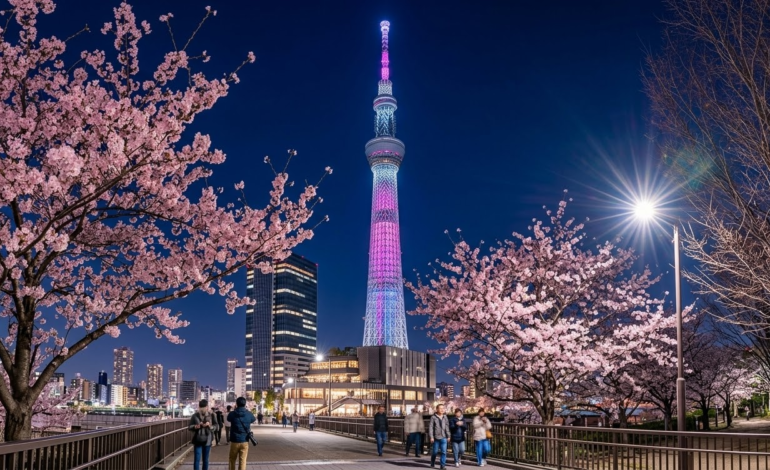
Standing in the shadow of Tokyo Skytree for the first time is a strange experience. You crane your neck, you still can’t see the top, and you start to understand why this tower has become the symbol of modern Tokyo. At 634 meters, it isn’t just tall it’s one of the tallest freestanding towers on the planet, and it draws millions of visitors every year who want the view, the glass floor, and that unmistakable photo from Sumida.
If you’re planning a trip and searching for real, useful information about Tokyo Skytree not recycled marketing copy this guide covers what it actually looks like inside, how much it costs, when to go, and whether it’s worth your time.
What Is Tokyo Skytree?
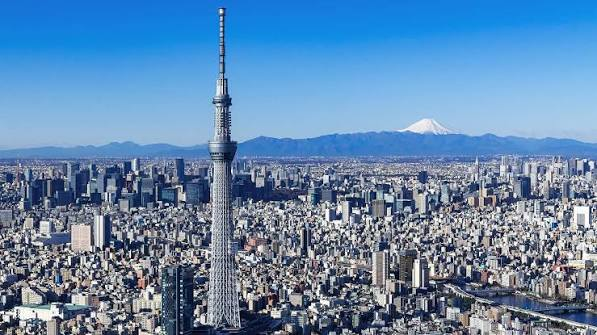
Tokyo Skytree is a broadcasting and observation tower located in the Sumida area of Tokyo, a short train ride from Asakusa. It opened to the public on May 22, 2012, and quickly became the tallest structure in Japan, taking over the broadcasting role that Tokyo Tower had held since 1958.
The tower’s height — 634 meters — isn’t random. It’s a nod to the old regional name “Musashi,” where the numbers 6, 3, and 4 can be read in Japanese. That kind of detail is typical of how the tower was designed: practical engineering wrapped around a distinctly Japanese sense of meaning.
Today, Tokyo Skytree functions as three things at once: a working digital broadcast tower, a tourist observation deck, and the anchor of a much larger complex called Tokyo Solamachi, which includes shopping, dining, an aquarium, and a planetarium.
Tokyo Skytree Observation Decks: What You’ll Actually See
There are two public observation levels, and they offer genuinely different experiences — not just “the same view, higher up.”
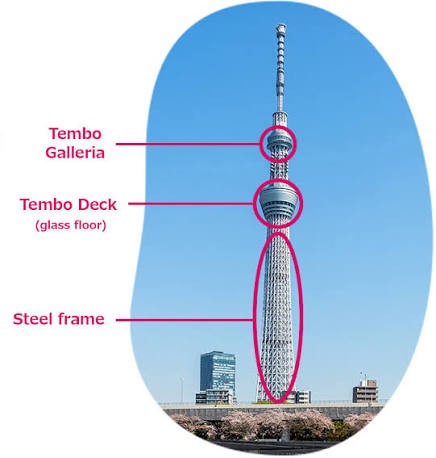
Tembo Deck (350 Meters)
This is the main observation level and where most visitors spend the bulk of their time. It spans three floors:
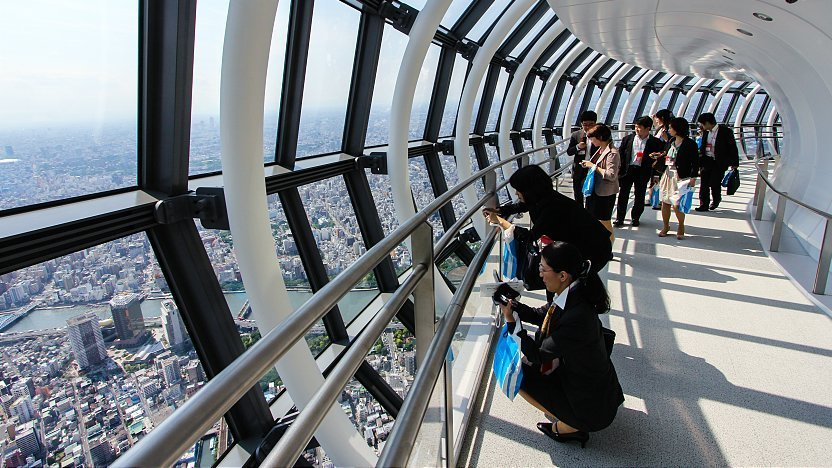
- The top floor has floor-to-ceiling glass panels over five meters tall, giving a full 360-degree view of Tokyo.
- The middle floor houses a souvenir shop and Sky Restaurant 634, which serves French-Japanese fusion dishes.
- The lower floor has a café and a glass floor panel that lets you look straight down — a favorite (and slightly terrifying) photo spot.
Tembo Galleria (450 Meters)
Reached by a second elevator from the Tembo Deck, this is a sloping, tube-shaped glass corridor that spirals upward from 445 to 450 meters. At the top sits Sorakara Point, officially 451.2 meters above ground — the highest point the public can reach at Tokyo Skytree. It’s quieter than the Tembo Deck, has fewer crowds, and feels more like a private moment with the skyline.
Tokyo Skytree vs. Tokyo Tower: A Quick Comparison
If you’re deciding between Tokyo’s two big towers, here’s how they stack up:
| Feature | Tokyo Skytree | Tokyo Tower |
|---|---|---|
| Height | 634 m | 333 m |
| Highest deck | 451.2 m | 250 m |
| Opened | 2012 | 1958 |
| Area | Sumida / Oshiage | Minato |
| Nearby landmark | Asakusa, Senso-ji Temple | Zojoji Temple |
| Vibe | Modern, sleek, high-tech | Retro, nostalgic |
Neither tower is objectively “better.” Tokyo Skytree gives you height and cutting-edge design; Tokyo Tower gives you a classic, old-Tokyo atmosphere and often shorter lines.
Tokyo Skytree Ticket Prices
Ticket pricing depends on which deck(s) you choose, whether you book online in advance or pay at the counter, and your age category. As a general guide for 2026:
- Tembo Deck only: Online advance tickets typically start from around ¥1,800–2,100 for adults.
- Tembo Deck + Tembo Galleria combo: Usually priced from roughly ¥2,700–3,800 for adults, depending on the date and time slot.
- Children (ages 6–14): Generally about half the adult price.
- Counter purchases: Add a same-day service fee — often around ¥500 per ticket — on top of the online rate.
Prices can shift by season, day of the week, and demand, so treat these as a starting reference rather than a guarantee. Always check the official Tokyo Skytree website close to your travel date for the exact current pricing.
Practical tip: Booking online isn’t just cheaper — it also lets you lock in a timed entry slot, which matters a lot on weekends and holidays when walk-up lines can stretch past an hour.
Best Time to Visit Tokyo Skytree
- Weekday mornings tend to be the quietest, especially right after opening.
- Sunset is genuinely one of the best times to go — you get daylight views on the way up and a lit-up city by the time you’re heading back down.
- Weekends and public holidays bring the heaviest crowds, particularly around midday.
- Clear winter days offer the best chance of spotting Mount Fuji on the horizon, though it’s never guaranteed.
Opening hours vary slightly by season and are sometimes adjusted for special events, so it’s worth confirming the current hours on the official site before you go rather than relying on a fixed number from an older article.
What Else Is There to Do at Tokyo Skytree?
The tower itself is only part of the appeal. The surrounding Tokyo Solamachi complex is worth building extra time into your schedule for:
- Over 300 shops and restaurants, ranging from souvenir stores to full sit-down dining
- Sumida Aquarium, known for its jellyfish tanks and penguin enclosure
- Konica Minolta Planetarium, a good option if you’re visiting with kids or the weather turns bad
- Seasonal illuminations and events, including themed light-ups timed to holidays and anniversaries
Many visitors pair a Skytree visit with a walk to nearby Senso-ji Temple in Asakusa, combining Tokyo’s ultra-modern skyline with one of its oldest and most iconic temples — all within a short walk or a couple of train stops.
Is Tokyo Skytree Worth Visiting?
Realistically, this comes down to what you want out of it. The 350-meter Tembo Deck alone gives you a genuinely impressive, wide-open view of Tokyo, and for most first-time visitors, that’s enough. The 450-meter Tembo Galleria adds a calmer atmosphere and a few extra photo opportunities, but the view itself isn’t dramatically different from the lower deck — so it’s more of a “nice to have” than a must.
If you only have time (or budget) for one Tokyo observation deck, Skytree is a strong pick specifically because of its height and the quality of the glass-walled 360-degree views. If you’re on a tight schedule, the free observation deck at the Tokyo Metropolitan Government Building is a legitimate alternative — you sacrifice height for a zero-cost view.
Also Read:
Key Takeaways
- Tokyo Skytree stands 634 meters tall and is the tallest structure in Japan.
- There are two observation decks: Tembo Deck (350 m) and Tembo Galleria (450 m), topping out at Sorakara Point (451.2 m).
- Booking tickets online in advance is cheaper and faster than buying at the counter.
- Weekday mornings and sunset are generally the best times to visit.
- The surrounding Tokyo Solamachi mall adds shopping, an aquarium, and a planetarium to the visit.
- It pairs naturally with a trip to nearby Asakusa and Senso-ji Temple.
FAQs
How tall is Tokyo Skytree?
Tokyo Skytree is 634 meters tall, making it the tallest structure in Japan and one of the tallest towers in the world.
What is the difference between Tembo Deck and Tembo Galleria?
Tembo Deck is the main three-floor observation level at 350 meters, with shops, a café, and a restaurant. Tembo Galleria is a smaller, higher spiral walkway reaching 450 meters, ending at Sorakara Point.
How much are Tokyo Skytree tickets?
Prices vary by ticket type and season, but online adult tickets for the Tembo Deck typically start around ¥1,800–2,100, with combo tickets for both decks priced higher. Buying at the counter adds an extra same-day fee.
Can you see Mount Fuji from Tokyo Skytree?
Yes, on clear days — most commonly in winter — Mount Fuji is visible from both observation decks.
Is Tokyo Skytree or Tokyo Tower better to visit?
Tokyo Skytree offers a higher, more modern viewing experience, while Tokyo Tower has a retro charm and is often less crowded. Many travelers with time visit both.
How do I get to Tokyo Skytree?
The tower is directly connected to Tokyo Skytree Station (Tobu Skytree Line) and a short walk from Oshiage Station, which is served by the Tokyo Metro Hanzomon Line, Toei Asakusa Line, and Keisei line.
For more updates visit: United Style Collective